
Dinosaurs tier list
T. rex, Triceratops, Spinosaurus and 27 more dinosaurs to rank.
Tiles to rank 30
Add a name or a picture below, or drop image files anywhere on the page. Then drag each tile into a row, or tap it to choose one.
About this template
Dinosaur rankings are a childhood favourite that adults never quite grow out of. This template has 30 genera, giant plant-eaters, armoured tanks and fast feathered hunters among them. Pteranodon and Mosasaurus are often filed with dinosaurs but were other kinds of reptile, so they are not in the tray; add them if you like.
Rank them on size, on how fearsome they were, or on which you would least like to meet. Archaeopteryx is here as a reminder that birds are dinosaurs too, so you could add a pigeon and see where it lands.
Their living relatives are on the birds board, and sea animals and insects cover more of the animal world.
Advertisement
Dinosaurs ranked from S to F
Ranked on how hard each one would stop you in a museum hall: size, weapons, strangeness, and how much the real animal lives up to its fame. Disagree? Drag the tiles above into your own order.
S tier
-
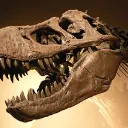
Tyrannosaurus. One of the strongest bites of any land animal ever found, on a predator the length of a bus. Still the king, and the skeletons of Sue and Stan show why.
-
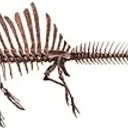
Spinosaurus. Longer than T. rex, with a sail on its back and jaws built for fish. Scientists are still arguing about how much of its life it spent in water.
-
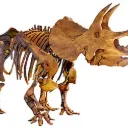
Triceratops. Three horns, a bony frill and a beak, living in the same place and time as T. rex. The perfect opponent.
-
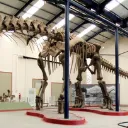
Argentinosaurus. One of the largest animals ever to walk on land, known from bones so big a single vertebra stands taller than a person.
-
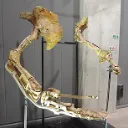
Therizinosaurus. Claws close to a metre long on a pot-bellied plant eater. Nothing else in the fossil record looks like it.
A tier
-
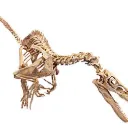
Velociraptor. The real animal was turkey-sized and covered in feathers. Still a sharp-clawed hunter, and still the most famous name after T. rex.
-
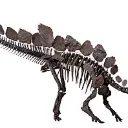
Stegosaurus. Plates down its back and four spikes on its tail. It lived so long before T. rex that we live closer in time to T. rex than T. rex did to it.
-
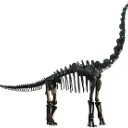
Brachiosaurus. Front legs longer than the back, holding its head up like a giraffe. The first dinosaur the visitors meet in Jurassic Park, and still the best reveal in the film.
-
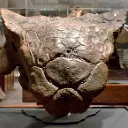
Ankylosaurus. Armour plates over its whole body and a bony club on the end of its tail. A tank that could swing back.
-
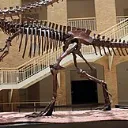
Giganotosaurus. A South American hunter that rivalled T. rex in length, though with a lighter skull and a weaker bite.
-
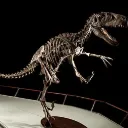
Utahraptor. Roughly the size of the raptors in the films, which the real Velociraptor never was, with a huge sickle claw on each foot.
-
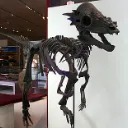
Pachycephalosaurus. A skull dome up to 25 centimetres thick. Whether they butted heads or pushed at the sides is still argued over.
B tier
-
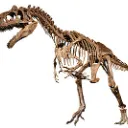
Allosaurus. The top hunter of the Late Jurassic, around 80 million years before T. rex appeared. Big, fast and badly underrated.
-
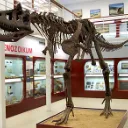
Carnotaurus. Horns over its eyes like a bull and arms even smaller than T. rex's. Built for speed rather than wrestling.
-
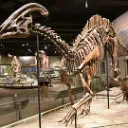
Parasaurolophus. A long hollow crest that worked like a horn, so herds could call to each other. A plant eater with a sound of its own.
-
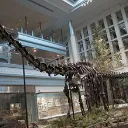
Diplodocus. Long enough to stretch across a tennis court, with a whip-like tail. Casts of it stand in museums around the world.
-
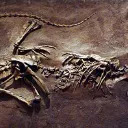
Dilophosaurus. The real one was twice the size of the film version, with two thin crests on its head. The frill and the venom spit were invented for the screen.
-
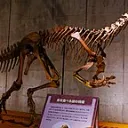
Baryonyx. A fish eater with a crocodile-like snout and a big thumb claw, found by an amateur collector in a Surrey clay pit in 1983.
-
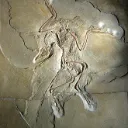
Archaeopteryx. Half bird, half dinosaur, found in Germany in 1861. The fossil that made the link between them hard to ignore.
-
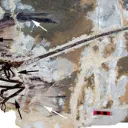
Microraptor. Four feathered wings and a glossy, iridescent black coat, a colour worked out from pigment cells kept in its fossil.
-
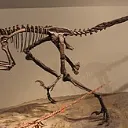
Deinonychus. Its discovery in the 1960s convinced scientists that some dinosaurs were quick and active, not slow and cold-blooded.
Advertisement
C tier
-
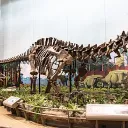
Apatosaurus. A great sauropod, best known for the naming mix-up that made Brontosaurus vanish for a century before it was revived as a separate animal.
-
Iguanodon. One of the first dinosaurs ever named. Early models put its thumb spike on its nose, which is the most interesting thing about it.
-
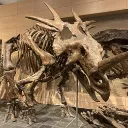
Styracosaurus. A frill ringed with long spikes. Striking, but Triceratops did the horned look better.
-
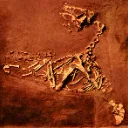
Oviraptor. Named the egg thief after it was found on a nest, which later turned out to be its own. A bad name for a good parent.
-
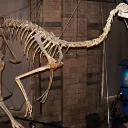
Gallimimus. Built like an ostrich and probably just as fast. Best remembered for running in a flock across the screen.
-
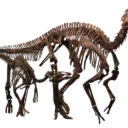
Edmontosaurus. A duck-billed plant eater, common and a bit plain, saved from a lower tier by mummified fossils that kept the shape of its skin.
D tier
-
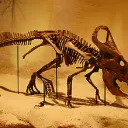
Protoceratops. A sheep-sized horn-face with a frill and no horns. Famous for a fossil in which it is locked in a fight with a Velociraptor.
-
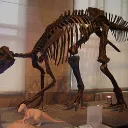
Maiasaura. The good mother lizard, found with nests and young, which taught us that some dinosaurs raised their babies. Kind, important, and not thrilling to look at.
F tier
-
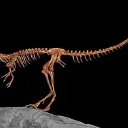
Compsognathus. About the size of a chicken and nearly as fearsome. Famous mainly for being small.
Advertisement
What's on the board
- Tyrannosaurus
- Late Cretaceous, western North America. One of the largest meat-eating dinosaurs, with a bite to match.
- Triceratops
- Late Cretaceous, western North America. A three-horned plant-eater with a bony frill.
- Velociraptor
- Late Cretaceous, Mongolia. A feathered hunter about the size of a turkey.
- Stegosaurus
- Late Jurassic, western North America. A plant-eater with plates along its back and a spiked tail.
- Brachiosaurus
- Late Jurassic, western North America. A long-necked plant-eater whose front legs were longer than its back legs.
- Diplodocus
- Late Jurassic, western North America. A very long plant-eater with a whip-like tail.
- Spinosaurus
- Middle of the Cretaceous, North Africa. A sail-backed meat-eater that caught fish.
- Ankylosaurus
- Late Cretaceous, western North America. An armoured plant-eater with a club on its tail.
- Allosaurus
- Late Jurassic, western North America and Portugal. The top predator of its day.
- Parasaurolophus
- Late Cretaceous, North America. A duck-billed plant-eater with a long, hollow crest.
- Pachycephalosaurus
- Late Cretaceous, North America. A plant-eater with a thick, domed skull.
- Iguanodon
- Early Cretaceous, Europe. A plant-eater with a thumb spike, and one of the first dinosaurs ever named.
- Carnotaurus
- Late Cretaceous, Argentina. A meat-eater with two horns above its eyes and very short arms.
- Giganotosaurus
- Late Cretaceous, Argentina. A huge meat-eater, close to Tyrannosaurus in length.
- Argentinosaurus
- Late Cretaceous, Argentina. One of the largest land animals ever found.
- Apatosaurus
- Late Jurassic, western North America. A long-necked plant-eater, more heavily built than Diplodocus.
- Dilophosaurus
- Early Jurassic, Arizona. A meat-eater with two thin crests on its head.
- Compsognathus
- Late Jurassic, Germany and France. A small meat-eater about the size of a chicken.
- Therizinosaurus
- Late Cretaceous, Mongolia. A plant-eating cousin of the meat-eaters, with very long hand claws.
- Utahraptor
- Early Cretaceous, Utah. The largest known raptor, around six metres long.
- Baryonyx
- Early Cretaceous, England. A fish-eater with a long, crocodile-like snout.
- Microraptor
- Early Cretaceous, China. A crow-sized dinosaur with feathered wings on all four limbs.
- Archaeopteryx
- Late Jurassic, Germany. An early bird with teeth, clawed fingers and a bony tail.
- Edmontosaurus
- Late Cretaceous, North America. A large duck-billed plant-eater found in big bone beds.
- Maiasaura
- Late Cretaceous, Montana. A duck-billed plant-eater found with nests of eggs and young.
- Oviraptor
- Late Cretaceous, Mongolia. A beaked, feathered dinosaur once wrongly thought to steal eggs.
- Deinonychus
- Early Cretaceous, North America. A wolf-sized raptor with a large sickle claw on each foot.
- Gallimimus
- Late Cretaceous, Mongolia. A fast runner shaped much like an ostrich.
- Protoceratops
- Late Cretaceous, Mongolia. A sheep-sized horned dinosaur with a neck frill.
- Styracosaurus
- Late Cretaceous, Canada. A horned plant-eater with long spikes around its frill.
Want to rank something else?Open a blank board in the tier list maker, or sort your own tiles on an alignment chart.
New tier listRelated templates
Advertisement
Advertisement
Advertisement